Basic Sciencemoderate evidence
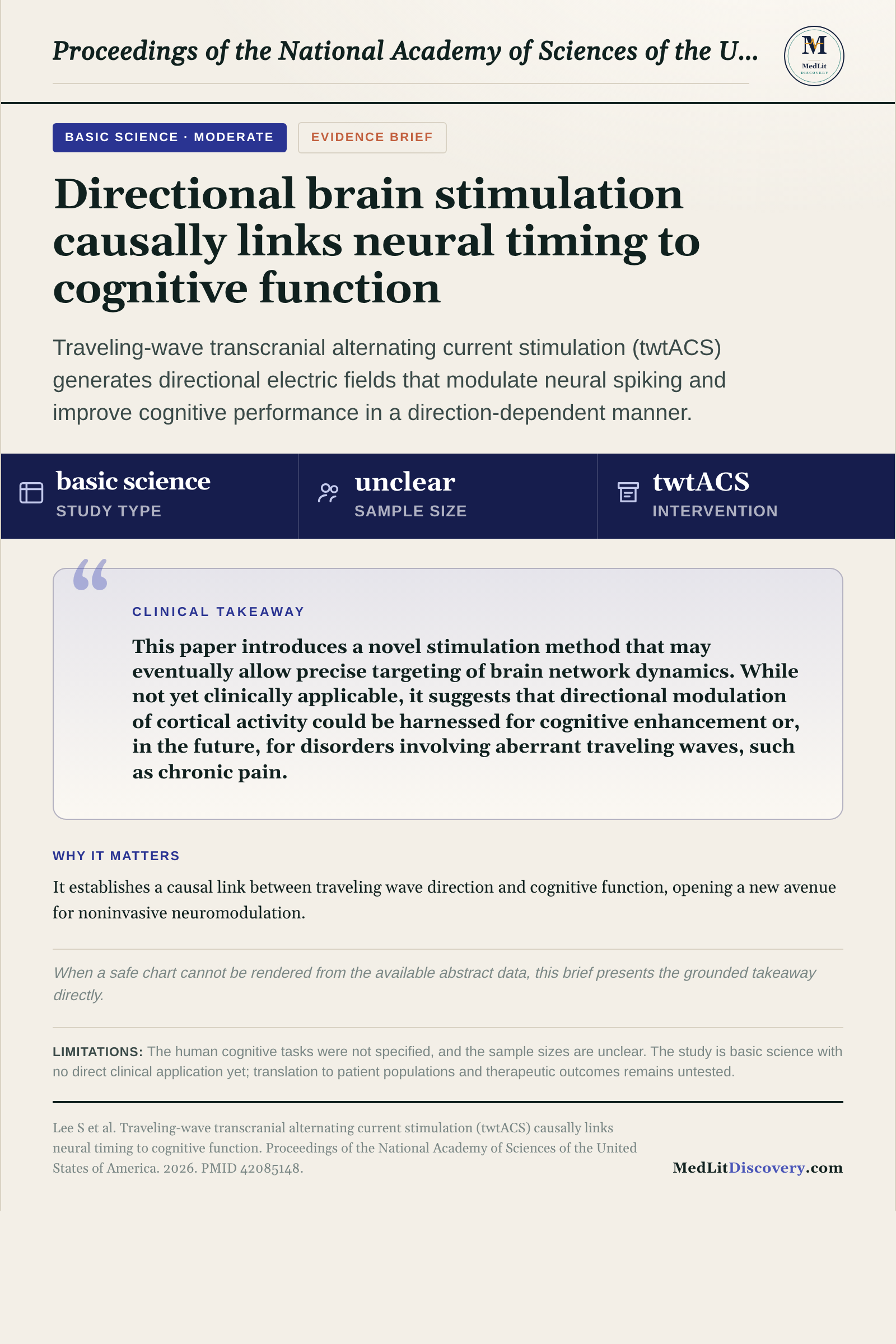
Traveling-wave transcranial alternating current stimulation (twtACS) causally links neural timing to cognitive function.
Proceedings of the National Academy of Sciences of the United States of America·May 12, 2026·PMID 42085148
Why it mattersIt establishes a causal link between traveling wave direction and cognitive function, opening a new avenue for noninvasive neuromodulation. For pain specialists, this technique could eventually target network-level dynamics underlying pain perception or cognitive aspects of chronic pain.
The papers that matter, first.
MedLit ranks the medical literature into a specialty feed with concise summaries, evidence-aware triage, and visual takeaways.
§
MedLit · Evidence, Distilled