Basic Sciencemoderate evidence
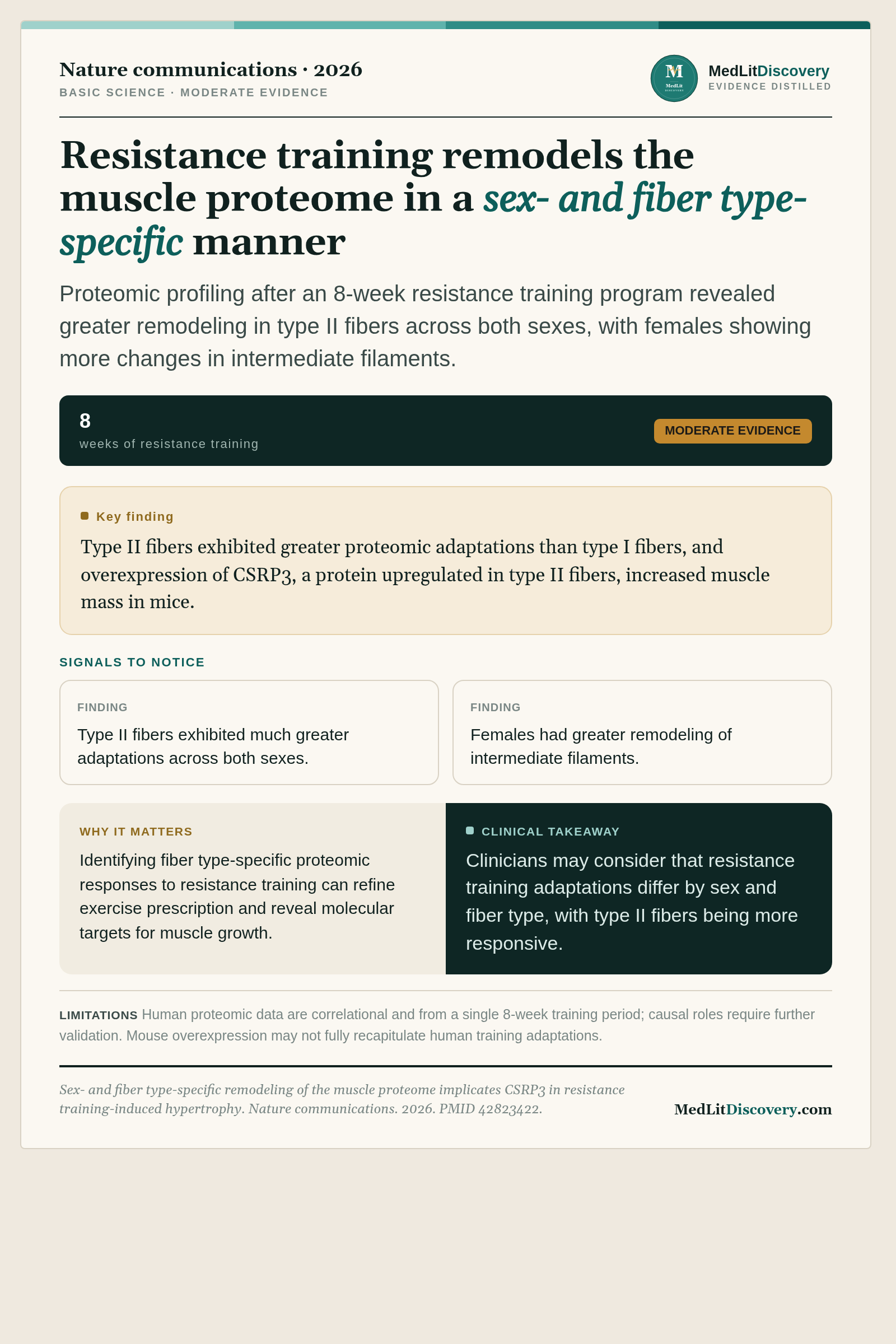
Sex- and fiber type-specific remodeling of the muscle proteome implicates CSRP3 in resistance training-induced hypertrophy.
Nature communications·September 2, 2026·PMID 42823422
Why it mattersUnderstanding sex- and fiber type-specific proteomic responses to resistance training can refine exercise prescription and identify molecular targets for muscle growth. The link between CSRP3 and hypertrophy offers a potential pathway for interventions aimed at improving muscle mass and function in aging or clinical populations.
The papers that matter, first.
MedLit ranks the medical literature into a specialty feed with concise summaries, evidence-aware triage, and visual takeaways.
§
MedLit · Evidence, Distilled