Randomized Trialhigh evidence
Detection of Δ9-Tetrahydrocannabinol Impairment Using Resting-State Functional Near-Infrared Spectroscopy: A Randomized Clinical Trial.
JAMA network open·January 2, 2026·PMID 41615687
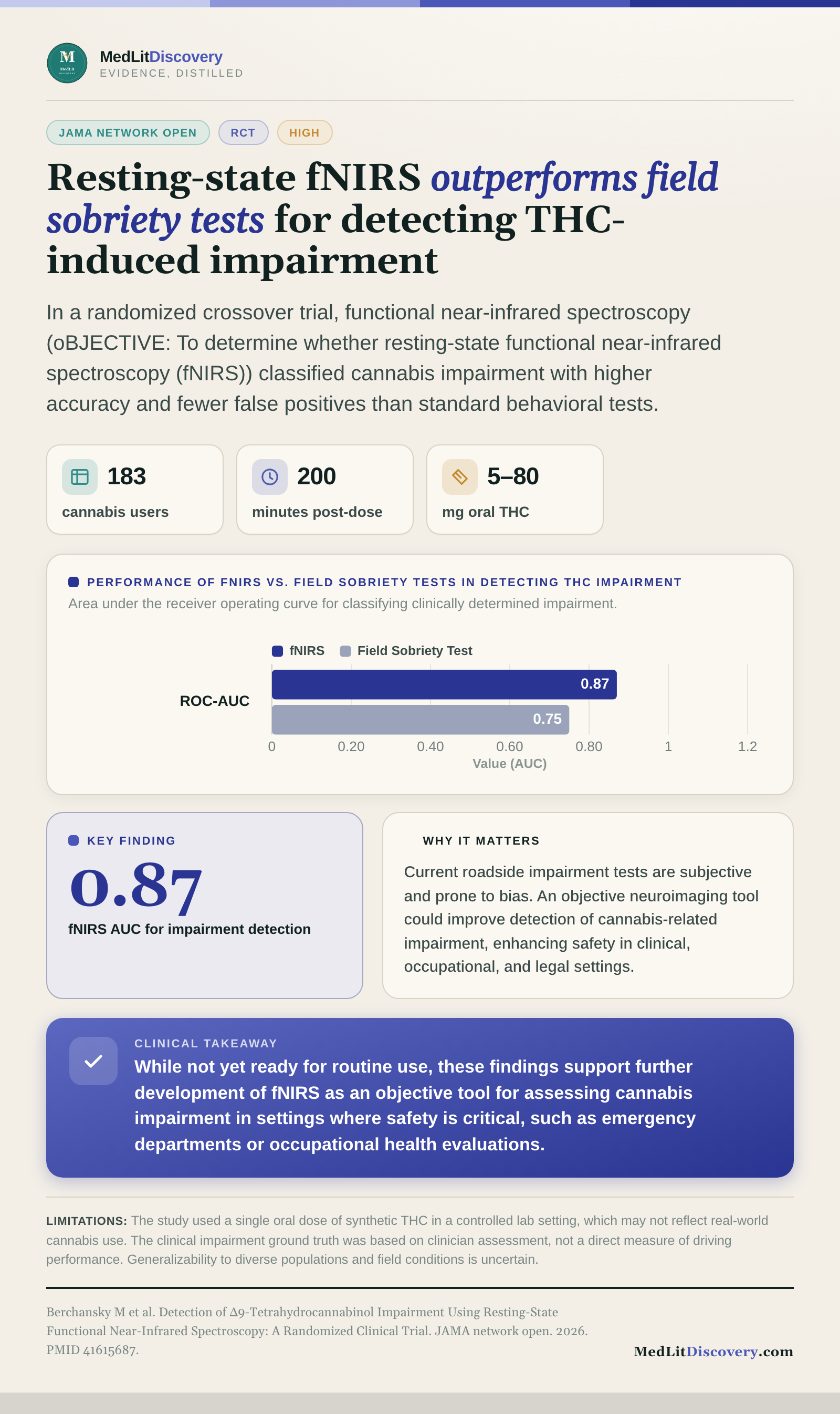
Why it mattersCurrent roadside impairment tests are subjective and prone to bias, with high false-positive rates. An objective neuroimaging tool like fNIRS could improve detection of cannabis-related impairment, potentially enhancing safety assessments in clinical, occupational, and legal settings.
The papers that matter, first.
MedLit ranks the medical literature into a specialty feed with concise summaries, evidence-aware triage, and visual takeaways.
§
MedLit · Evidence, Distilled