Cohort Studymoderate evidence
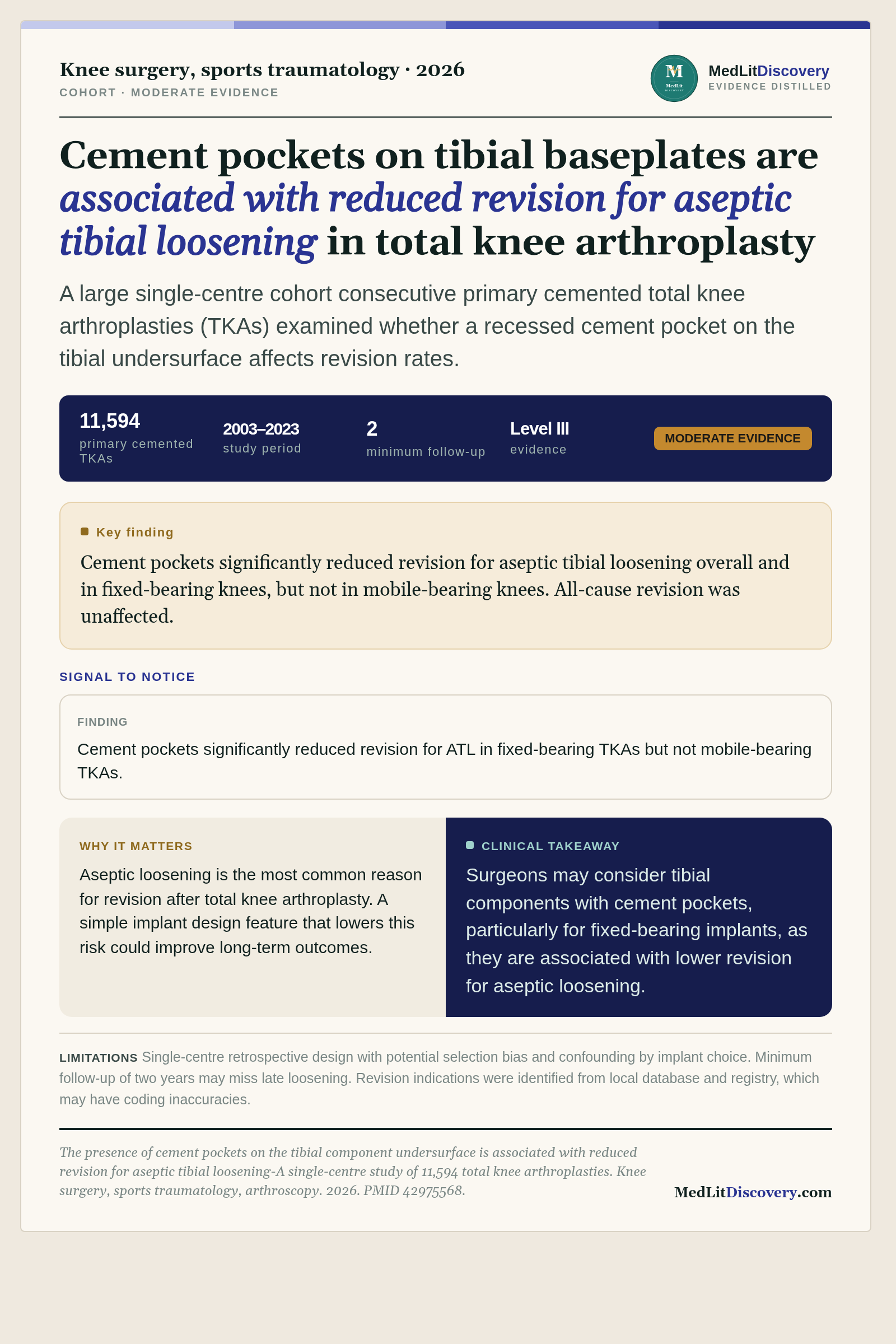
The presence of cement pockets on the tibial component undersurface is associated with reduced revision for aseptic tibial loosening-A single-centre study of 11,594 total knee arthroplasties.
Knee surgery, sports traumatology, arthroscopy : official journal of the ESSKA·November 3, 2026·PMID 42975568
Why it mattersAseptic loosening is the leading cause of revision after total knee arthroplasty, and implant design features like cement pockets may influence failure risk. This large registry-linked cohort provides real-world evidence that a simple design modification could reduce tibial loosening, particularly in fixed-bearing knees.
The papers that matter, first.
MedLit ranks the medical literature into a specialty feed with concise summaries, evidence-aware triage, and visual takeaways.
§
MedLit · Evidence, Distilled